
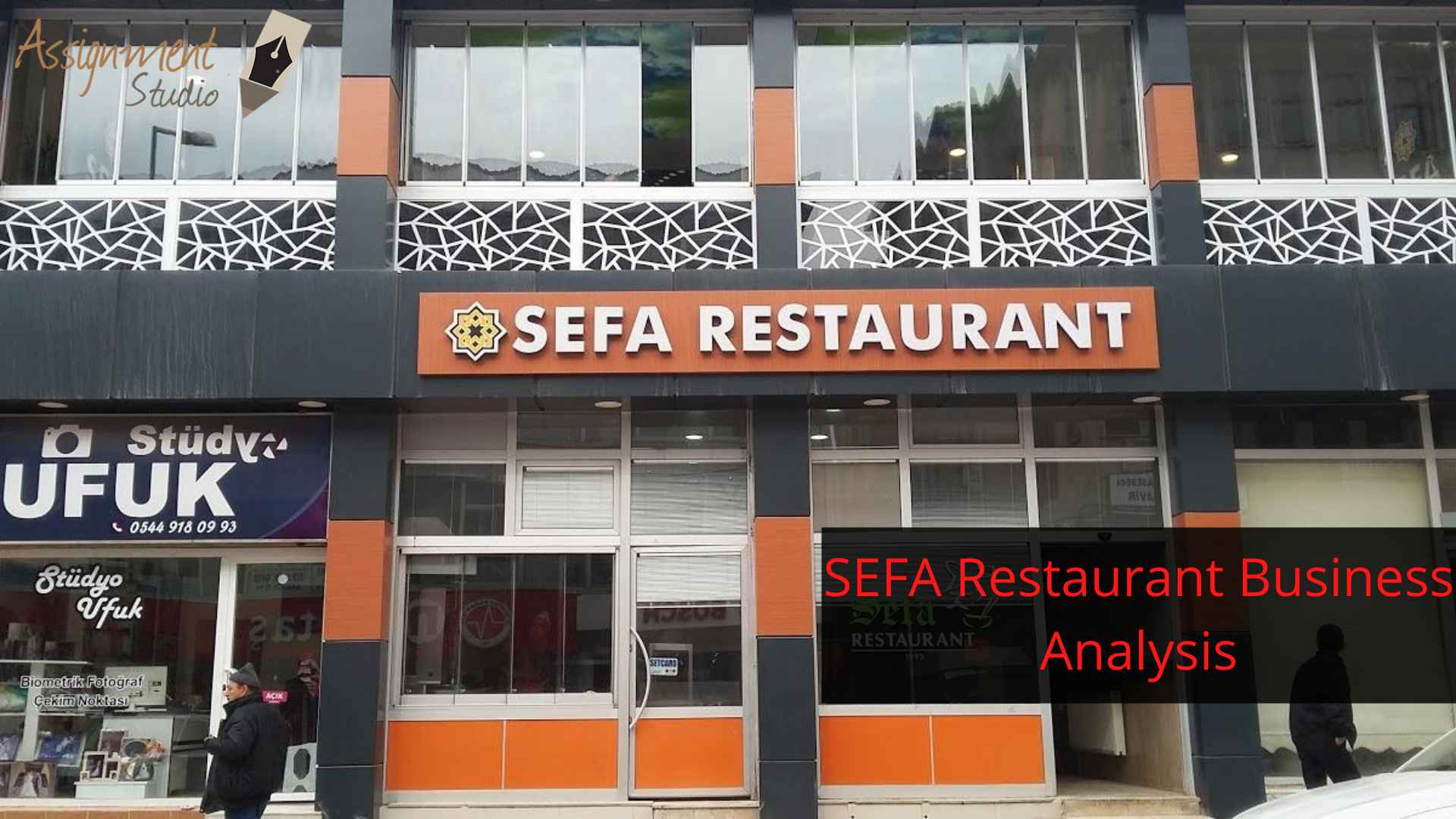
SEFA Restaurant Business Analysis
1.Social Enterprise
A social enterprise can be defined as an organization that applies commercial strategies to maximize improvements in human welfare rather than maximizing profits. Social organizations could be for profit and non-profit organizations. While there are several advantages of being a social enterprise such as the ability to raise capital at low rates, positive marketing due to social benefit and potentially low labor costs, social enterprises face certain issues as well. Of particular importance is the ability to raise capital for the project, developing a self sustaining model for the project and getting people to participate in the projects.
Within the firms analyzed, we have made the following recommendations:
- The business model for Charcoal Lane is sustainable and self-sufficient in our view. We believe the business will be profitable by the end of Year 3, leading it to self-fund its initiatives.
- The business model for Abbotsford requires a bit of tweaking where we have recommend additional revenue sources such as developing a faculty area where classes for drama, theater etc. would take place. Moreover, a fortnightly concert as well as opening a cultural area devoted to various global cultures would in our view make for additional revenue sources, making the project further viable.
- We reject the model and idea for Dress for Success. Firstly, the enterprise relies on fundraising initiatives for survival and as such, is not self-sustaining. Secondly, the amount would be better utilized increasing the technical and business skills amongst females (as well as underprivileged males) so that they can be successful in finding a sustainable earnings avenue.
- Recommend Now Firm:
2.1 Organization:
The organization that we would recommend to SEFA is the Charcoal Lane restaurant. The restaurant is a modern Australian restaurant that fuses contemporary Australian cuisine with native indigenous flavors. What makes Charcoal Lane stand out is its image as a fashionable modern restaurant which at the same time provides employment and training opportunities for the local public and the disadvantaged youth, particularly in the Aboriginal community.
2.2 Analysis
Charcoal Lane restaurant follows the typical business model of a restaurant with one difference, its employees consist of experienced professionals as well as apprentices from the disadvantaged communities particularly the Aboriginal community.
The business has kept costs on the lower site through taking advantage of the environment in which it operates. The restaurant is based at Gertrude Street site, which had been empty for about fourteen years, meaning it was able to negotiate for lower rents. Given that it provides a social welfare, the business has signed an agreement to pay lower than market rents during its first three years post inception (which is when management expects the project to become profitable as well). With rents already at the lower end of the spectrum, the employee expenses have also been kept in check through partnerships with Corporates as well as large contributions from Mission Australia. Consequently, the business has already been generating revenue of around AU$1.0 million post its first year of operations and has been commercially breaking even. Given black bottom-line expected in the next two years, the company is on course to generate positive returns (ROI) going forward and makes for a viable investment. Helping the local community also makes for a good marketing story and is likely to pay dividends going forward as word spread about the work that the restaurant is doing.
The Social Return on Investment (SROI) is the positive impact the restaurant will have on the community at large, with skilled youth within the aboriginal community as a consequence of the restaurant’s endeavors. The fact that the restaurant has partnerships with various referral agencies such as the Accor Group, the Retailers Association and Spotless is another positive as this indicates continuous support to the apprentices rather than just leaving them in the wilderness post training. Also, a huge contributing factor towards the positive employability of the youth getting training at Charcoal Lane is the brand name of William Angliss Institute associated with them. Just a brief here, William Angliss is the leading provider of hospitality training across Australia and the Institute is responsible for training the young and aspiring youths at the Charcoal Lane restaurant.
2.3 Conclusion
To conclude, we would definitely recommend Charcoal Lane to SEFA as we believe it provides a sustainable ROI and SROI going forward. Key strengths of the program being run at Charcoal Lane include the provision of employment and training opportunities to the disadvantaged youth particularly in the Aboriginal Community, its association with the William Angliss Institute which provides a strong brand for the apprentices, the restaurant’s partnership with various referral agencies and various cost control measures which help keep costs in check through lower rents etc.
- Recommend with Changes Firm:
3.1 Organization:
The organization that we would recommend with changes to SEFA is Abbotsford Convent. The site is an accumulation of buildings serving as an arts and tourism precinct as well as a place for holding artistic events such as plays, meetings etc. Whilst the endeavor is definitely a pleasing one for the community, we believe the positives derived from the organization can certainly be increased as well as higher revenue earned if it makes a few changes to its business model.
3.2 Analysis
As mentioned above, Abbotsford Convent is an accumulation of buildings serving as an arts and tourism precinct. The vision of the organization is to be a unique arts, cultural and learning precinct and to be a community resource, an incubator for creativity sharing of ideas, and a place for enjoyment. True to its vision, Abbotsford Convent provides rental space to artists for working and showcasing their creativity as well as small business start-ups and non-profits. Moreover, another key earning driver for the organization are the events that they allow to be held at the premise. The events, of course, have to be artistic in nature such as drama, puppet shows, writer festivals, youth music festivals etc. The final revenue driver is the charges from the car park across the street which is almost always full. Apart from these, for the renovation of its facilities, the organization relies on contributions from well-wishers as well as corporates.
The change that we would recommend making to the business model is an addition wherein we recommend the organization also develop a faculties wing wherein it would provide teaching and training to people looking to develop or harness their artistic skills such as in paintings, drama, theater, film making etc. From a business point of view, this would provide an additional stream of revenue to the project with the potential to become profitable as more people sign up, a bit of marketing effort is put in and as the business gains traction. The avenue could also include cooking and baking classes and become a true community place with a slogan along the lines of something for everyone. Moreover, while Abbotsford currently only allows for events such as puppet shows, writer festivals etc. to be held on its premise, it could also potentially hold concerts fortnightly for struggling musicians and / or underground bands, providing a platform for them to gain popularity as well as earn revenue through the ticket proceeds. These concerts would be in addition to the music festivals that Abbotsford holds. Going forward, once it has a sustainable revenue stream, we believe Abbotsford should also open a small museum and should devote an area to displaying the various cultures across the globe as we believe that could have the potential to become a huge family attraction. Opening the cultural area would be cheap given that they could use imitations for display. The museum may be an expensive prospect, however, quite a few high net worths or corporations would gladly be willing to contribute to the cost.
With the above changes, we believe the project could make sustainable returns over its life as well as a high social return with benefit to the community in the form of skill development (paintings, drama etc.), recreational facilities and an outlet for struggling artists.
Purchase Complete Assignment Solution
[maxbutton id=”6″ ]